Reflective and Experimental Practice
I felt I needed to set out a learning model specific for making art which would consolidate my art practice and my teaching. It would have to be simple, clear to follow and focus on the reflective process, fundamental to key developments. The model would also help to drive and identify the experimental process, recognizing the chance - and special - marks made when creating work.
Donnelly, S. (2015) Working Practice: Reflective and Experimental Development
Using this model a final piece of work can be again be reflected upon, encouraging development or even embarking upon a new theme (the design of the model is in a spiral to help illustrate the process of continual development).
The model is equally valid when working with an individual or a group. It can also be applied across a
portfolio of work and has proved extremely valuable in helping someone to assess and progress their work who might be operating within a comfort zone.
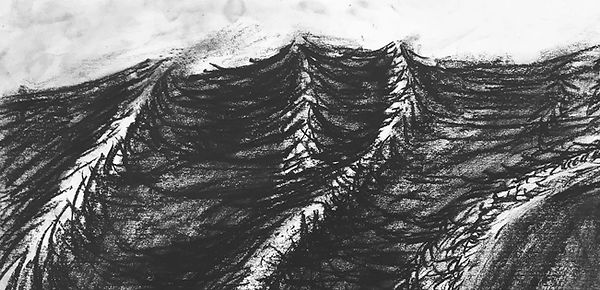
'Mark’ (2015) Experimental mark making session using charcoal
What worked? Why did it work? How did we do it? What can we do with it…
The below feedback was taken from a learner when working with charcoal to develop mark making using the Working Practice: Reflective and Experimental Development model Donnelly, S. (2015). The methodology used involved groupwork with developments made being discussed as well as being recorded in the form of a written questionnaire. The response shown is in the learners own words without any corrections or amendments (May 2015).
What worked?
I did a lot of different marks then placed similar ones in a row and it looked like a flat surface moving.
Why did it work?
I built it up and tried it over a full page to see what it would look like then did two more.
How did we do it?
I did fast and quick strokes to show the movement of the surface and fast hard violent strokes to show the roughness of the water.
What can we do with it…
I can show the movement of the sea.
'Mark' Rough Water (2015)